
Reliance Industries Ltd reported a 22 per cent year-on-year decline in consolidated net profit for the June quarter, primarily because the previous year's earnings were inflated by a one-time gain from the sale of its stake in Asian Paints.

India bought 1.87 million barrels of Russian oil per day in May so far, meeting approximately 40 per cent of its oil imports.

Iranian Foreign Minister Seyyed Abbas Araghchi stated that the Strait of Hormuz remains open to all commercial vessels, requiring ships to coordinate with Iranian naval forces due to regional tensions and a US blockade.

It may now be time to question the price India is paying for Israel's disregard of the serious undermining of India's energy security, asserts former foreign secretary Shyam Saran.

State Bank of India Chairman C S Setty has expressed support for a 'pause' in policy rates by the Reserve Bank of India's monetary policy committee, believing it will help stabilise conditions and support economic growth. He also urged investors to look beyond short-term equity market movements and focus on India's structural transformation, driven by reforms and digital infrastructure.

The government has assured citizens that there is no need to panic book LPG cylinders, as uninterrupted supply to households is being ensured despite the ongoing conflict in West Asia.

A US-sanctioned tanker carrying Iranian crude oil is heading to India, marking the resumption of oil imports from Iran after seven years.

India has commissioned its new indigenously-built nuclear-powered ballistic missile submarine INS Aridaman into service, further strengthening the naval component of its nuclear triad. Defence Minister Rajnath Singh also highlighted the Indian Navy's role in securing maritime trade routes.

'When we start describing somebody as an enemy that is the start of politics and emotion after which no business can take place.' 'We need to get out of this, allow Indian businessmen to do business with China.'

Iran has reportedly allowed select "friendly nations" including India and Pakistan limited access to the Strait of Hormuz amid ongoing conflict, easing some energy supply concerns. Here's what the move means for global trade and oil routes.

If we really want to curb the further depreciation of the rupee and make the rupee appreciate, we want to come out of the mindset that the exchange rate is merely a number, bring policy corrections to help reduce the outflow of foreign exchange by imposing suitable tariffs to discourage imports and bring self reliance, discipline FPIs, and correcting rules governing royalty outflows, suggests Dr Ashwani Mahajan, National Co-Convenor, Swadeshi Jagaran Manch.
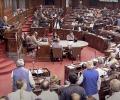
Opposition MPs in the Rajya Sabha criticised the Modi government's economic policies, citing the LPG crisis, lack of energy security, and concerns over the Economic Stabilisation Fund.

Trump further alleged that Iran was behind the attacks on three vessels carrying Indian seafarers near the Hormuz Strait, which resulted in the deaths of three, despite the US Central Command having confirmed that the strikes were carried out by American naval forces, calling the incident "totally unacceptable."
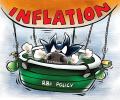
The Reserve Bank of India has increased its retail inflation projection for 2026-27 to 5.1 per cent, up from an earlier estimate of 4.6 per cent. This revision is primarily attributed to mounting input costs, driven by the pass-through of higher global energy prices to domestic petrol and diesel rates, which have seen significant increases since May.

Shares of power generation-related companies surged on Wednesday, with the BSE Power index hitting a new high of 8,497, driven by strong demand, robust order books, and significant capital expenditure announcements from key players like Hitachi Energy India, Adani Green Energy, and CG Power and Industrial Solutions.

The global artificial intelligence (AI) boom has significantly reshaped equity markets, with Taiwan surpassing India to become the world's fifth-largest stock market. India has seen its market capitalisation decline by 7% year-to-date, while AI-linked economies like Taiwan and South Korea have surged.

Defence Minister Rajnath Singh assures India's energy security amidst West Asia tensions, highlighting naval protection of tankers and readiness to counter cross-border terrorism.

Aviation fuel prices for domestic airlines remain unchanged, providing stability for local carriers, while commercial LPG and 5-kg cylinders see a significant rate hike due to rising international energy costs.

Sharp differences between Iran and the UAE over the West Asia conflict were on full display during the BRICS foreign ministers' meeting in New Delhi, signalling the challenges the bloc faces in reaching a consensus position on the crisis.
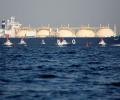
Iranian Deputy Foreign Minister Kazem Gharibabadi has urged India to take the lead in bringing peace to West Asia, highlighting the UAE's role in stalling BRICS consensus on the conflict. Gharibabadi also discussed a new framework with Oman for merchant vessels passing through the Strait of Hormuz.

The Indian government is set to accelerate reforms, including measures to enhance foreign direct investment, speed up divestment, and boost asset monetisation, to maintain economic growth despite rising fuel and fertiliser import costs driven by the West Asia crisis.

India's mergers and acquisitions (M&A) market is projected to maintain an annual run-rate of approximately $200 billion, evenly split between domestic, inbound, and outbound transactions, despite global geopolitical turbulence, according to Rajesh Singhi, global co-head, M&A Advisory, Standard Chartered Bank.

Indian benchmark indices Sensex and Nifty experienced a sharp decline in early trading due to escalating tensions in the Middle East, driving crude oil prices higher. Global market bearishness and foreign fund outflows further contributed to investor unease.

The new Index of Industrial Production (IIP) series, which shifts the base year from 2011-12 to 2022-23 and is scheduled for release on June 1, will, for the first time, track rare earths and minor minerals, piped natural gas (PNG), and water supply, sewerage and waste management.
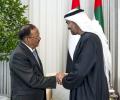
India is the only significant power that all parties trust, or at least do not distrust, notes former defence secretary Ajay Kumar.
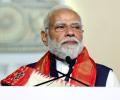
Congress leader Rahul Gandhi has criticised Prime Minister Narendra Modi's call for citizens to make economic sacrifices in response to the West Asia conflict, calling it 'evidence of failure'. Gandhi accused Modi of shifting responsibility onto the public and being incapable of running the country.

Most members of the Reserve Bank of India's Monetary Policy Committee (MPC) expressed concerns about inflation becoming generalised and highlighted uncertainties surrounding both inflation and growth prospects due to the West Asia conflict, according to the recently released minutes.

'OMCs are incurring losses of Rs 1,000 crore per day due to the West Asia crisis.'

The United States has announced it will not renew sanctions exemptions for the purchase of Russian and Iranian oil, ending a 30-day waiver that allowed some countries, including India, to continue importing Russian oil despite sanctions related to the Ukraine war.

The Reserve Bank of India (RBI) and the central government have introduced a package of measures, including tax exemptions for FPIs on government securities and a concessional foreign-exchange swap facility, aiming to attract up to $50 billion in foreign capital. This initiative is designed to strengthen India's balance of payments and potentially cover the projected BoP gap for FY27.

The ongoing conflict involving the United States, Israel, and Iran intensified sharply with attacks on critical energy infrastructure across the Gulf, even as US President Donald Trump said he had cautioned Israeli Prime Minister Benjamin Netanyahu against targeting Iran's key South Pars Gas Field.

India has significantly reduced Aviation Turbine Fuel (ATF) prices for international airlines by 27% due to easing global fuel benchmarks, while simultaneously increasing commercial LPG and 5-kg cylinder prices to record highs.

India on Tuesday expressed deep concern over the escalating conflict in Iran and the Gulf region, urging all sides to exercise restraint and prioritise civilian safety.

For weeks, the war skirted the edge of catastrophe without tipping over. Missiles flew, there was much destruction, commanders were assassinated, cities across the Gulf and even in Israel struggled to absorb the shock. But one line held: Energy infrastructure, the arteries of the global economy, remained largely untouched. That is no longer true. Prem Panicker continues his must read daily blog on the Gulf War.

India emerged reasonably well from 2025. But now, the oil shock and war-related supply disruptions have again driven funds out of India and significantly weakened the rupee, points out Ajay Chhibber.

Commerce and Industry Minister Piyush Goyal announced that a US team is expected to visit India next month for trade talks, following an earlier Indian delegation's visit to Washington, DC, in April to finalise an interim pact and advance negotiations for a broader bilateral trade agreement.

Lavrov said that the US has set itself the objective of 'achieving economic domination', adding further to it that Americans want to control the routes to leading countries to provide its energy sources to them.

Indian refiners have access to only limited Iranian volumes compared with Russian oil, and even the barrels on offer come with 'too many hassles'.

As Prime Minister Narendra Modi urges Indians to travel less, rising fuel prices are already changing driving habits.

'In all these years of rupee depreciation, of rising oil prices, of inflation caused by import dependence, not one leader had the courage to look the people in the eye and say: Please do this for your country.'
